
Plain EPS, Graphite EPS or Rockwool?
Choosing the right thermal insulation material is one of the most important decisions when we want to create an energy-efficient, comfortable and economically viable building in the long term. There are several solutions available on the market, but the most common question is: which is better – plain EPS, graphite EPS or rock wool?
In this article, we compare the three materials in a simple but professional way, helping you make an informed choice.
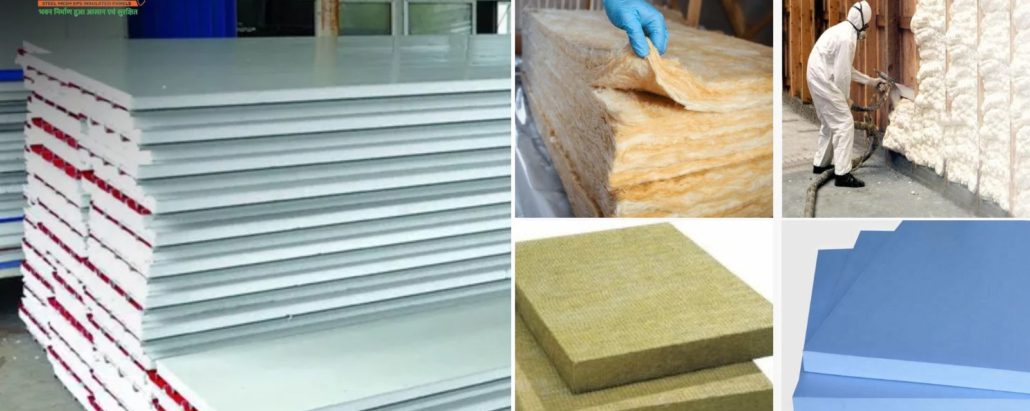
What is plain EPS (white polystyrene)?
Plain EPS (expanded polystyrene) is one of the most common and affordable thermal insulation materials. It is a white, foamed plastic that traps air – this is what gives it its insulating properties.
Advantages:
- Cheap, good value for money
- Easy and simple to install
- Waterproof, not sensitive to moisture
- Good thermal insulation properties (λ ≈ 0.038 W/mK)
Disadvantages:
- Medium insulation efficiency compared to other materials
- Not vapor permeable
- In case of fire, it melts and emits smoke
Graphite EPS – the “improved” polystyrene
Graphite EPS is also expanded polystyrene, but it is made with graphite additives. The graphite particles reflect thermal radiation, thereby improving the thermal insulation properties of the material.
Advantages:
- Better thermal insulation (~20-25% more efficient, λ ≈ 0.031 W/mK)
- Lower heat loss with the same thickness
- Easy and simple to work with
- Good value for money for mid-range projects
Disadvantages:
- UV sensitive – requires shading during processing
- Slightly more expensive than white EPS
- Not vapor permeable
- Similar fire behavior to plain EPS
Rock wool – the premium solution
Rock wool is made from natural basalt stone, has a fibrous structure, is non-combustible and vapor-permeable. It is becoming increasingly popular with those who place great emphasis not only on thermal insulation, but also on soundproofing, fire protection and a healthy living environment.
Advantages:
- Excellent thermal and acoustic insulation (λ ≈ 0.035 W/mK)
- Non-combustible – fire resistance class A1
- Vapor-permeable, helps the wall to ventilate
- Mechanically stable, does not shrink
Disadvantages:
- More expensive than EPS products
- Heavier material, requires more serious fastening
- Requires experience in its implementation
- More vulnerable to mechanical influences
Comparison table:
| Property | Plain EPS | Graphite EPS | Rock wool |
|---|---|---|---|
| Thermal conductivity factor (λ) | ~0,038 W/mK | ~0,031 W/mK | ~0,035 W/mK |
| Price | ★★★★☆ | ★★★☆☆ | ★★☆☆☆ |
| Vapor permeability | ✘ | ✘ | ✔ |
| Fire resistance | ✘ (melt) | ✘ (melt) | ✔ (A1, non-combustible) |
| Soundproofing | Low | Low | Excellent |
| Mechanical stability | Good | Good | Very good |
| Simplicity of execution | ✔✔✔✔ | ✔✔✔ | ✔✔ |
When should you choose which one?
- When should you choose? Plain EPS: if cost is the most important consideration and there is a normal need for thermal insulation (e.g. garage, summer house, low-budget residential building).
- Graphite EPS: if higher thermal insulation performance is required at the same thickness – ideal for energy renovations, newly built family houses.
- Rock wool: if fire resistance, vapor permeability, or sound insulation are also important – for example, in apartment buildings, passive houses, and more demanding investments.