The construction industry is constantly evolving, with newer and more efficient technologies emerging that simultaneously serve faster construction, higher technical standards, and cost-effectiveness. One such modern solution is the Leier Bark Panel technology, which offers numerous advantages over traditional brick construction. In this article, we have collected the most important arguments why more and more people are choosing this innovative system for the construction of family houses, apartment buildings, and industrial facilities.
Faster construction, less labor required

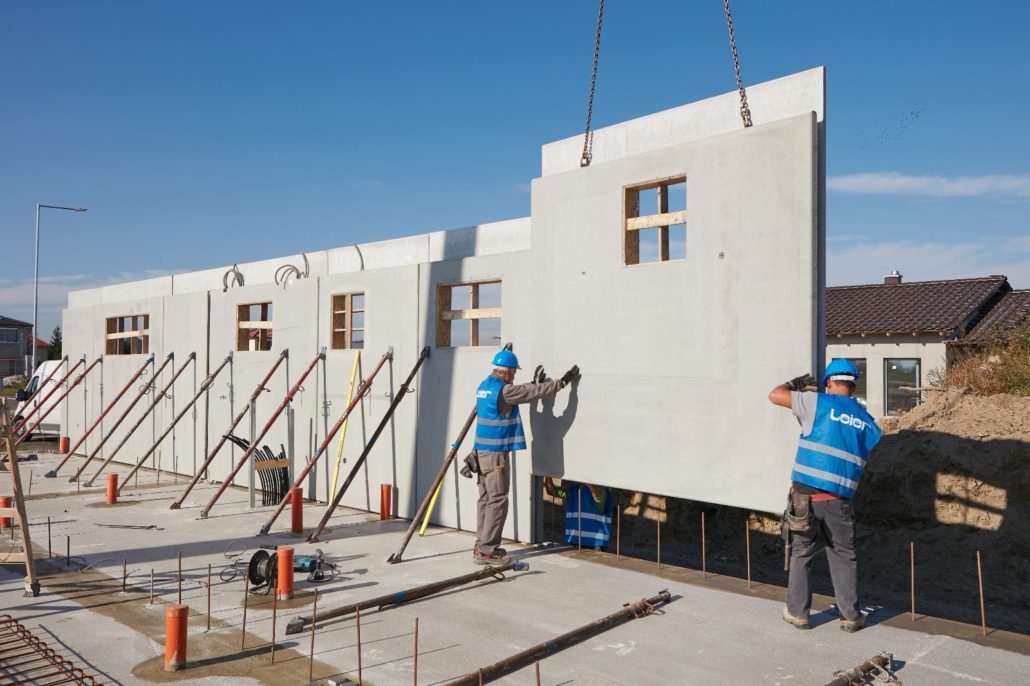
Leier bark panels are prefabricated reinforced concrete elements that are partially manufactured in the factory, requiring minimal post-processing on site. The installation of walls and floors can be days or even weeks faster than building brick walls. This not only saves time, but also significantly reduces labor costs, especially in today’s labor-scarce environment.

Outstanding static properties

Bark panels are load-bearing reinforced concrete structures that are precisely dimensioned during prefabrication. This ensures a high degree of static safety and excellent earthquake resistance. The load-bearing capacity of reinforced concrete can be several times that of traditional brick walls, which can be especially important in the case of multi-storey or long-span buildings.

Precise workmanship without any defects

Since the panels are manufactured in a factory using templates, dimensional accuracy and flatness are outstanding. This reduces the possibility of on-site errors and the time and material spent on plaster and cladding repairs. The smooth, even surfaces provide an excellent basis for further professional work.

Cost-effectiveness in the long term

Although at first glance the bark panel solution may seem more expensive in terms of material costs, it is often more cost-effective than a brick wall solution in terms of overall project costs. Lower labor requirements, faster construction, less construction waste, and reduced scaffolding and logistics costs all contribute to a more economical implementation.

Better thermal and sound insulation

The hollow design of Leier bark panels allows the installation of thermal insulation materials during subsequent concreting, so the structure can be not only strong but also energy-efficient. Due to the mass of the reinforced concrete structure, the sound insulation properties are also significantly better than those of traditional brick walls.

Can be combined perfectly with other modern technologies

Leier bark panel technology can be easily integrated with other building systems, such as thermal insulation systems, smart home solutions or modern mechanical packages. This is especially beneficial when the builder is looking for a complex, future-proof home or investment.
Brick has been one of the most popular building materials for centuries, earning its place in the world of construction with its durability and reliability. However, with the development of the industry, modern versions are now available that raise the quality of brick construction to an even higher level. One such innovation is the face-polished brick, which offers several advantages over traditional, cut or non-calibrated bricks. Let’s see why it is worth choosing it!


Millimeter precision, less mortar

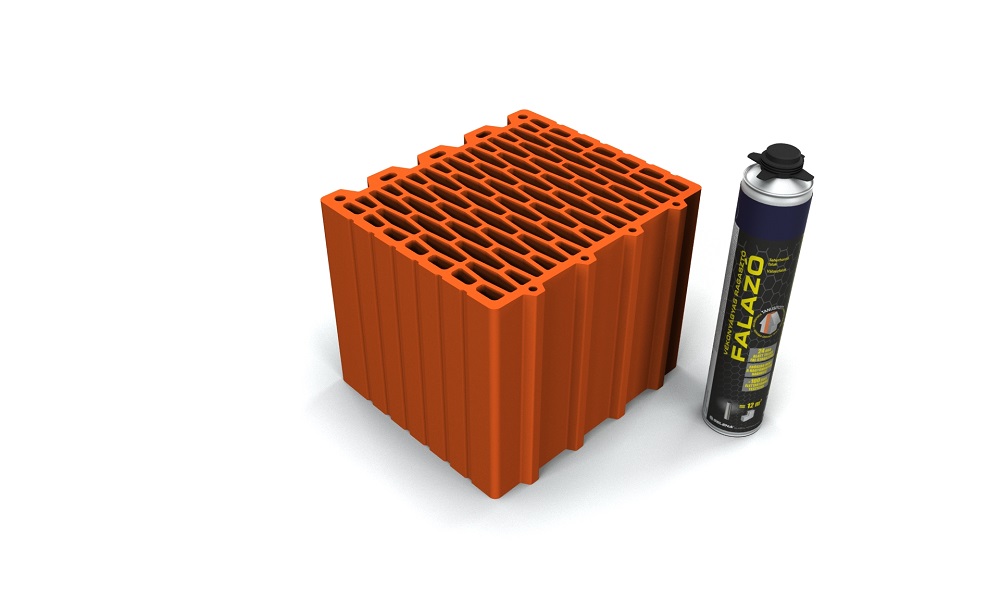
One of the biggest advantages of face-polished bricks is the completely flat surface machined on both sides. Thanks to this, the elements fit together extremely precisely, so that a thin, special adhesive mortar (e.g. thin-bed mortar or adhesive foam) is sufficient for bonding. This results in significant time and cost savings during construction.


Faster execution

The precise fit and thin adhesive layer not only allow for more accurate masonry, but also faster work. There is no need to mix traditional mortar, apply a thick layer, and then level it. Masonry can be up to 30% faster with this technology, which can be especially valuable for larger projects.


Smaller thermal bridge, better thermal insulation

Due to fewer and thinner mortar layers, the masonry exhibits more uniform thermal properties. Thicker layers of traditional mortar can form thermal bridges through which heat escapes more easily. In the case of flat-faced bricks, this phenomenon can be significantly reduced, making the masonry more energy-efficient.


Fewer construction errors

Flat surfaces and a fast construction method reduce the chance of construction errors. The flatness of the walls is improved, and subsequent plastering becomes easier, as there is no need to worry about correcting surface irregularities. This results in higher quality both aesthetically and technically.


Environmentally friendly solution

The flush-faced brick technology is not only economical, but also more environmentally friendly, as it requires less mortar, water and admixtures. The precise fit means less waste, and since fewer auxiliary materials are used, CO₂ emissions can also be lower during the entire construction process.


Reliable, durable structure

It is important to emphasize that the polished brick retains the excellent mechanical properties, durability and natural raw materials of traditional brick. The new technology does not replace the proven structural values, but only makes them more efficient and modern.

Choosing the right thermal insulation material is one of the most important decisions when we want to create an energy-efficient, comfortable and economically viable building in the long term. There are several solutions available on the market, but the most common question is: which is better – plain EPS, graphite EPS or rock wool?

In this article, we compare the three materials in a simple but professional way, helping you make an informed choice.


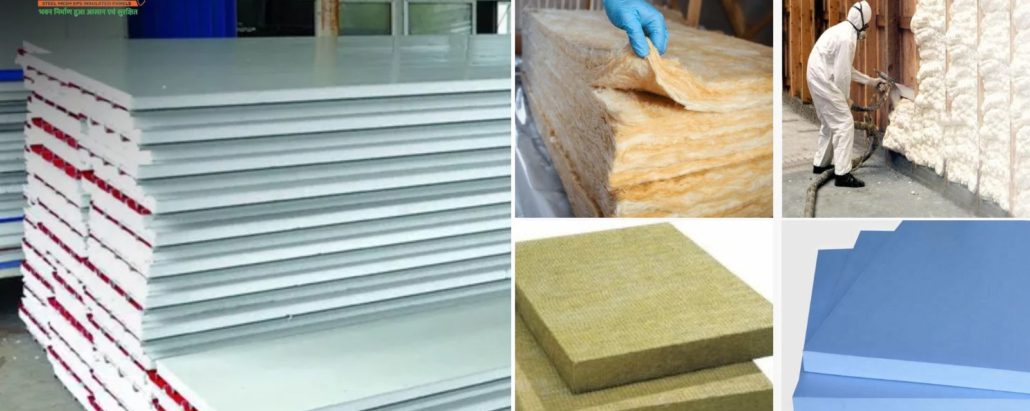
What is plain EPS (white polystyrene)?

Plain EPS (expanded polystyrene) is one of the most common and affordable thermal insulation materials. It is a white, foamed plastic that traps air – this is what gives it its insulating properties.

Advantages:

  • Cheap, good value for money
  • Easy and simple to install
  • Waterproof, not sensitive to moisture
  • Good thermal insulation properties (λ ≈ 0.038 W/mK)

Disadvantages:

  • Medium insulation efficiency compared to other materials
  • Not vapor permeable
  • In case of fire, it melts and emits smoke

Graphite EPS – the “improved” polystyrene

Graphite EPS is also expanded polystyrene, but it is made with graphite additives. The graphite particles reflect thermal radiation, thereby improving the thermal insulation properties of the material.

Advantages:

  • Better thermal insulation (~20-25% more efficient, λ ≈ 0.031 W/mK)
  • Lower heat loss with the same thickness
  • Easy and simple to work with
  • Good value for money for mid-range projects

Disadvantages:

  • UV sensitive – requires shading during processing
  • Slightly more expensive than white EPS
  • Not vapor permeable
  • Similar fire behavior to plain EPS

Rock wool – the premium solution

Rock wool is made from natural basalt stone, has a fibrous structure, is non-combustible and vapor-permeable. It is becoming increasingly popular with those who place great emphasis not only on thermal insulation, but also on soundproofing, fire protection and a healthy living environment.

Advantages:

  • Excellent thermal and acoustic insulation (λ ≈ 0.035 W/mK)
  • Non-combustible – fire resistance class A1
  • Vapor-permeable, helps the wall to ventilate
  • Mechanically stable, does not shrink

Disadvantages:

  • More expensive than EPS products
  • Heavier material, requires more serious fastening
  • Requires experience in its implementation
  • More vulnerable to mechanical influences

Comparison table:

PropertyPlain EPSGraphite EPSRock wool
Thermal conductivity factor (λ)~0,038 W/mK~0,031 W/mK~0,035 W/mK
Price★★★★☆★★★☆☆★★☆☆☆
Vapor permeability
Fire resistance✘ (melt)✘ (melt)✔ (A1, non-combustible)
SoundproofingLowLowExcellent
Mechanical stabilityGoodGoodVery good
Simplicity of execution✔✔✔✔✔✔✔✔✔

When should you choose which one?

  • When should you choose? Plain EPS: if cost is the most important consideration and there is a normal need for thermal insulation (e.g. garage, summer house, low-budget residential building).
  • Graphite EPS: if higher thermal insulation performance is required at the same thickness – ideal for energy renovations, newly built family houses.
  • Rock wool: if fire resistance, vapor permeability, or sound insulation are also important – for example, in apartment buildings, passive houses, and more demanding investments.

Building a pool is an exciting yet serious decision-making task in any construction project. A family or community pool can be important not only for relaxation, but also for increasing the value of your property. However, the choice of pool shell material fundamentally determines the lifespan, maintenance requirements and comfort of your pool. In this post, we will explain why it is not recommended to choose a pool shell made of plastic, carbon or ceramic, and what alternatives may be ideal.


1. Main Problems of Plastic, Carbon, and Ceramic Pool Structures

Material Composition and Durability

  • Plastic Pools: Although lightweight and inexpensive, plastic tends to deform and crack, and prolonged exposure to UV radiation makes it brittle over time. This leads to faster wear, requiring frequent replacement or repair.
  • Carbon Pools: While stronger and lighter, carbon-based pools are extremely expensive, and any damage is difficult and costly to repair. Additionally, they don’t always withstand continuous water pressure and external mechanical impacts well.
  • Ceramic Pools: Ceramic is a very rigid material; although aesthetically appealing, it is prone to cracking—especially in the event of ground movement, soil shifting, or inadequate foundation work.

Thermal Insulation and Energy Efficiency

These materials generally have poor thermal insulation properties, which results in higher heating costs and energy waste. A well-insulated, solid pool structure provides better comfort and more economical operation.

Maintenance and Repair Costs

Repairing damage or cracks in these materials is difficult and often requires expert intervention, adding extra costs.


2. What Material Should You Build a Pool From?

Concrete and Reinforced Concrete Pools

Concrete pools are classics in construction due to their exceptional durability and long lifespan. With proper foundation and waterproofing, they can be built in virtually any size, shape, or design. Thanks to the strength of reinforced concrete, these pools can withstand weather conditions and mechanical stress.

Steel-Framed Pools

These pools feature a high-strength steel frame coated with various waterproofing layers. Steel-framed pools are quick to install and have excellent load-bearing capacity.

Composite Pools with Proper Construction

Composite materials can also be suitable if manufactured and installed to high standards and protected with durable coatings. However, combining composites with a concrete or steel-framed structure is generally recommended.

What’s the Difference?

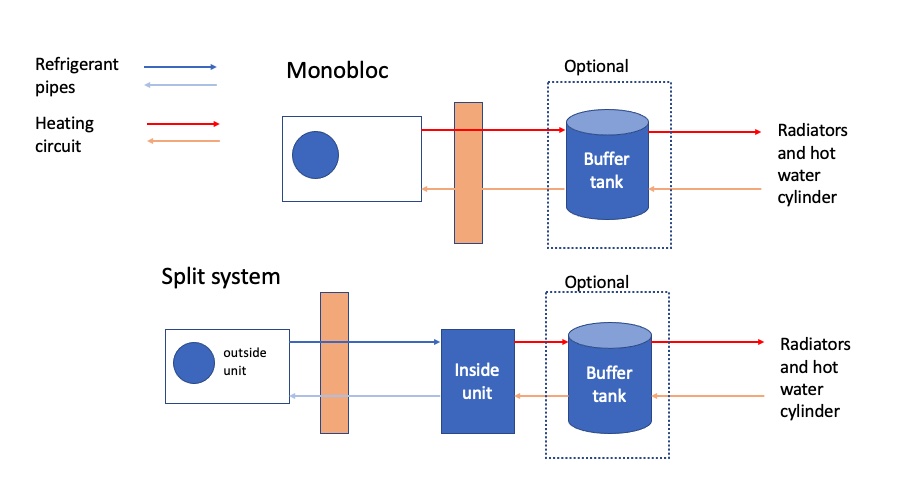
  • Monoblock Heat Pump:
    All components — compressor, condenser, pressure valve, etc. — are housed in a single outdoor unit. The indoor system connects to it via a sealed water circuit.
  • Split Heat Pump:
    Consists of two units: the compressor and condenser are placed outdoors, while the hydronic module — which includes elements like the expansion valve and heat exchanger — is located indoors. The two units are connected by refrigerant pipes.

Advantages and Disadvantages

FeatureMonoblockSplit System
Ease of InstallationQuick installation — only water pipes are needed; no F-Gas certification requiredMore complex — requires refrigerant piping and an F-Gas-certified technician
MaintenanceSingle unit, easier access and servicingTwo units — more components to inspect and maintain
Freeze Protection in Cold ClimatesOutdoor water pipes are at risk of freezing; glycol or antifreeze may be requiredThe entire water circuit is indoors, safer in very cold conditions
Efficiency and Energy PerformanceSimilar efficiency under comparable performance levelsSlight efficiency loss possible due to longer refrigerant lines
Indoor Space and NoiseNo noise indoors, saves spaceIndoor module generates noise and requires more space
CostsLower installation cost, simpler setupHigher upfront cost, more complex installation

Which Option Is Recommended?

  • Monoblock: a practical solution for smaller budgets, simpler installations, retrofits, or when no F-Gas certified technician is available. Best suited for moderate climates with milder temperature variations.
  • Split System: recommended for colder climates or when greater flexibility is needed for indoor placement and system design. It can offer better overall performance but requires a higher initial investment.